
Featherdown sold glamping without turning farmers into hoteliers
Dutch company Featherdown put comfortable tents without electricity on working farms and made the farmer the host. The story of the farm glamping model and what campsite businesses in Türkiye can take from it.
Teknovan Editorial Team ·
A farmer wants extra income but doesn't want to open a guesthouse, set up a reception or answer a booking phone. A family from the city wants to show their children where the hens lay, but doesn't enjoy putting up a tent. Featherdown brought these two together in the same field.
Started in the Netherlands and later well known in the UK, the brand is one of the earliest examples of what's now called "farm glamping". It's a model worth reading about for anyone in Türkiye thinking of offering stays in an olive grove, a vineyard or on land with livestock.
From Center Parcs to the farm
The person who founded Featherdown was the Dutch entrepreneur Luite Moraal. According to the company's own account and a report in the British farming magazine Farmers Weekly, Moraal's background included large holiday businesses such as Center Parcs. So someone who knew large-scale holidays tried the exact opposite: a network of stays spread across small, scattered, working farms.
The first farm opened in the Netherlands in 2003. There the brand is known as "Het Betere Boerenbed". In the mid-2000s the model moved to England, and the first English farm was Manor Farm in Hampshire. Moraal died in 2011. According to the company, by then Featherdown had spread to France and Germany as well as the Netherlands and the UK.
The balance between tent, farmer and guest
Featherdown's product has three parts.
The tent. Large canvas tents that Moraal designed together with an architect. Inside are separate sleeping areas, a kitchen sink and a flushing toilet. Each tent sleeps up to six. There's no electricity and no Wi-Fi, and the lighting comes from candles and oil lamps. That isn't something missing. It's a deliberate choice. The company says it wants guests to reconnect with nature and with each other.
The farmer. The farm keeps working. The host farmer is someone who wants to earn extra income while looking after the countryside. The company stresses that the investment expected of the farmer is limited and the risk is low. But the infrastructure comes from the farmer: because the tents have water and flushing toilets, the site needs water and waste water connections.
The experience. Every Featherdown farm has a shared clay oven. The animals, the fields and the daily rhythm of the farm are the programme itself for guests. Seasonal themes such as newborn lambs at Easter feature in the campaigns.
In an interview with Farmers Weekly, founder Moraal said a farm running five tents at average occupancy could earn around £15,000 a year in extra income. That was an estimate for the UK at the time, not a calculation for today. But it shows the logic of the model: a small number of units bringing in a side income without touching the farm's main business.
What did it do differently?
It sold the farm, not the land. Featherdown's guests don't come for the view. They come to be inside a working farm. That's hard for a hotel to copy.
It standardised the product, not the host. The tents and their equipment are set up to the brand's standard. But every farm is different, and the farmer is themselves. Guests book with confidence because they know what they'll find, and the farmer's personality sets the experience apart.
It kept sales central. Bookings are taken on the brand's own website, with all the farms shown together. The farmer gets a shop window they couldn't build alone, and their job becomes looking after guests.
It made a shortcoming part of the promise. A tent without electricity becomes a complaint if it's explained badly. Featherdown described it as a family break away from screens.
It targeted families. School holidays and families with children are at the centre of the brand's campaigns. When the audience is clear, the language is clear too.
Why did the model suit farmers?
A farmer's day is already full. Animals in the morning, the fields at midday, machinery in the evening. Telling this person to "open a guesthouse" means handing them a second full-time job. Featherdown's offer was different: a few tents, standard equipment and a brand doing the selling. What the farmer had to do was keep the site ready and host the guests.
The lack of electricity helps here too. Wiring, heating and internet mean breakdowns as well as investment. In a tent that runs on candles and oil lamps there's little to go wrong. And because guests know this from the start, it doesn't turn into a complaint.
Then there's the season. A farm's busy periods and families' holidays don't always line up. A model with only a few units can be stretched or shrunk to fit the farmer's workload.
What a campsite in Türkiye can take from this
In Türkiye there are many small businesses offering stays in olive groves, vineyards, goat farms or orchards. The lessons from Featherdown's experience fit them directly.
In the Aegean the olive harvest usually falls in late autumn and winter, and the grape harvest at the end of summer. So the farm calendar is full of events that can draw guests outside the beach season. In the months when coastal campsites empty out, a farm inland can sell its own calendar. That may not need a big investment, just a good page telling guests in advance what happens when.
- Don't hide your farm, show it. The olive harvest, the grape harvest, cheesemaking, milking the goats. Instead of selling these separately as "activities", make them a natural part of the stay. That's what guests are coming for anyway.
- Start with a few units. A typical Featherdown farm runs on a handful of tents. Start with a number of units that won't disrupt your main business, and add more as bookings come in.
- Be honest about what's missing. If there's no electricity, if the Wi-Fi is weak, if the road is a dirt track, put it at the very top of the listing. Guests who come with the right expectations won't complain about it. They may even come for it.
- Don't neglect the infrastructure. Featherdown's tents have flushing toilets. Clean water and a proper waste water solution are the foundation of guest satisfaction on a farm stay.
- Sort out permits from the start. The rules for putting accommodation units on agricultural land vary with the location and the type of land. At the time of writing, find out the current rules from your municipality and the provincial directorate of culture and tourism (il kültür ve turizm müdürlüğü).
- Sell your farm produce. Your own olive oil at breakfast, a bottle of wine or a jar of jam as guests leave. A small sale alongside the stay is what guests remember.
For more on what guests remember, have a look at our post on guest experience as a campsite's most valuable asset. The story of individuals opening their land to campers is in our Hipcamp post.
If you'd like to show the tents, bungalows and pitches on your farm one by one on a map and follow bookings from a single dashboard, teknovan.io is being built for that.
Sources
- About Feather Down (Featherdown official website)
- Become a Feather Down farm (Featherdown official website)
- Center Parcs pioneer seeks green areas to establish luxury farm camping sites (Farmers Weekly)
- Luxury camping company seeks Irish farms (Farmers Journal)
- Luxury farm camping concept launched (Leisure Opportunities)
Image credits
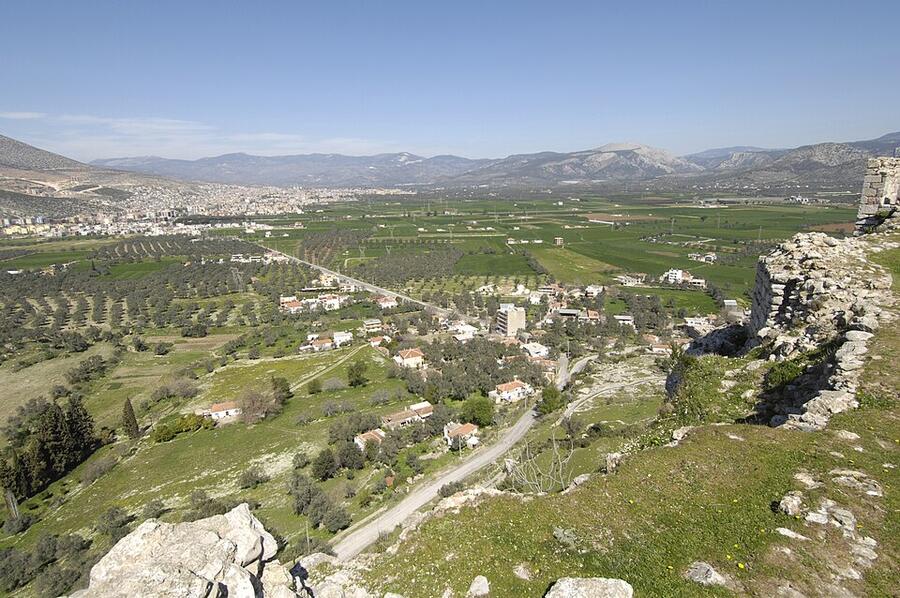
Photos illustrate the region; they are not photos of the campsites themselves.
- Beçin'den Milas: Dosseman, CC BY-SA 4.0, Wikimedia Commons