How did Nomady bring camping to Swiss farms?
In Switzerland, where wild camping is banned in most cantons, Nomady started by going village to village and persuading landowners. Today it lists more than 1,600 camps in the Alpine region.
Teknovan Editorial Team ·
In Switzerland, taking your tent and pitching it at the edge of a forest isn't as easy as you might think. There's no single national rule on wild camping. It's left to the cantons, and in most of them staying outside official campsites is generally banned. In national parks and nature reserves it's banned outright. On the other hand, in the words of Nomady's founder, most of the country's private land is in the hands of farmers.
Nomady settled in between these two facts: it connected people who want to camp with farmers and private individuals willing to open one or two pitches on their land.
A trial that started at home
Nomady was founded in 2019 by Oliver Huber and Paolo De Caro. The company came out of the town of Einsiedeln in the Swiss canton of Schwyz.
As Huber told the start-up podcast Swisspreneur, the first step wasn't software but a walk. He went round landowners in his home area one by one and explained the idea. Five or six said yes, and that was enough to test a first, simple version. After that, growth came largely from word of mouth and Huber's own Facebook posts.
Timing helped too. In the same interview, the travel restrictions of the pandemic are described as making Nomady exactly the solution people were looking for. A few nights on a farmer's land, away from the crowds, suited the mood of the time.
Growth in numbers
| Period | What happened |
|---|---|
| 2019 | Founded in Einsiedeln, trial with the first landowners |
| By the end of the first two years | More than 130 hosts, more than 14,000 nights booked |
| First funding round | Names such as Silvan Engeler, a co-founder of Threema, and André Lüthi, chair of the Globetrotter Group, plus the innovation foundation of Schwyzer Kantonalbank |
| June 2022 | 2 million Swiss francs led by Sparrow Ventures, the investment arm of the Migros Group, and a strategic partnership with the Touring Club Switzerland (TCS) |
| 1 January 2024 | Merger with MyCabin, a similar platform in southern Germany, under a joint umbrella, Nomady Holding |
With the merger, MyCabin became Nomady Germany, and MyCabin's partnership with the Black Forest tourism body (Schwarzwald Tourismus) carried on under the Nomady name. Nomady's website today says it lists more than 1,600 camps in the Alpine region, covering Germany, Austria, Switzerland and Italy.
One thing in the table stands out: the 14,000 nights of the first two years came not from a big advertising budget but from hosts persuaded one at a time, and their guests. Investors and corporate partners only came in once that foundation was in place.
What Nomady did differently
It found supply in the fields, not on a screen. Many platforms wait for hosts to find them. Nomady's first hosts came because the founder went door to door. For a farmer, a form arriving over the internet and an idea explained by a neighbour sitting across the table are not the same thing.
It sold a simple product. Most Nomady hosts are farming families and private individuals who open one or a few pitches on their land. Some offer just a tent pitch, some a flat spot for a campervan, some a hut in the woods, a tipi in a meadow or a yurt by a stream. No big facilities, no pool, no entertainment team. And guests know that when they book.
It gained legitimacy through trusted partners. TCS is one of Switzerland's biggest motoring clubs and runs its own campsites too. A partnership with an organisation like that tells both campers and farmers "this is serious". The ongoing partnership with the Black Forest tourism body does the same job.
It sped up growth by merging. Rather than collecting hosts from scratch in Germany, it joined forces with MyCabin, which did the same thing. Two neighbouring markets that speak the same language and have similar guests came under one roof.
What a campsite in Türkiye can take from this
Nomady's story says different things to different groups in Türkiye.
If you own land:
- Starting small is a legitimate path. Most Nomady hosts start with one or two pitches. A corner of an olive grove, the edge of a vineyard, the shade of an orchard. What matters is a clean toilet, water and clear rules.
- The farm is context, not a product. Guests are curious about your animals, your harvest, your breakfast. You don't have to package these, but mentioning them in your listing makes a difference.
- Talk about permits from the start. Offering paid camping in Türkiye raises questions of zoning, municipal rules and tourism legislation. Checking with the belediye (municipality) and the İl Kültür ve Turizm Müdürlüğü (provincial culture and tourism directorate) before you invest saves surprises later.
If you run a campsite:
- Your neighbour can be a partner, not a rival. What the Nomady and MyCabin merger did at scale is also possible on a small scale. A shared promotional page with other small sites in the area, sending guests to each other on days when you're full, a shared local guide.
- Your first guests are your best marketers. What first grew Nomady wasn't advertising but word of mouth. A short thank-you message and a review request to departing guests often brings in more business than an expensive ad. We explained how to make this a routine in our guest experience post.
- Get to know local organisations. As with TCS, a relationship with tourism associations, caravan clubs or the municipality's tourism office in your area makes your name trustworthy.
Going door to door, on a small scale
Huber's first step works in Türkiye too. If there are neighbours in your area with land that suits camping but who have never thought about it, sitting down and talking with them can win you two things. First, a reliable place to send your guests on weekends when you're full. Second, as the number of places to camp in the area grows, the area itself becomes known as a camping route.
What helps most in that conversation is concrete information: what you needed in the first season, what guests ask most often, what caused problems. Nomady's first five or six hosts didn't hear a grand promise either, just a small idea they could try.
If you're curious about the company that built a similar model in the US, see our Hipcamp post, and for the same idea in Norway, our Campanyon post.
teknovan.io is a tool we're designing so that landowners starting with a few pitches, and small campsites, can run their bookings, calendar and guest communication from one place.
Sources
- Oliver Huber, Nomady (Swisspreneur Podcast)
- Camping Startup Nomady schliesst erste Finanzierungsrunde ab, Moneycab
- Sparrow Ventures und TCS investieren in Nomady, Horizont
- Nomady customer story, Sharetribe
- Nomady und MyCabin Fusion, press release (PDF)
- Over 1600 camps in the Alpine region, Nomady
- Is wild camping allowed in Switzerland?, The Local
Image credits
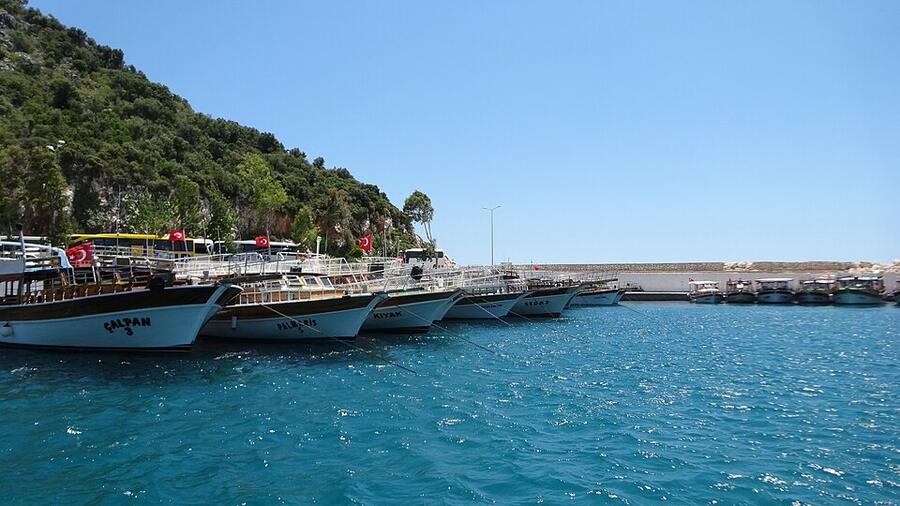
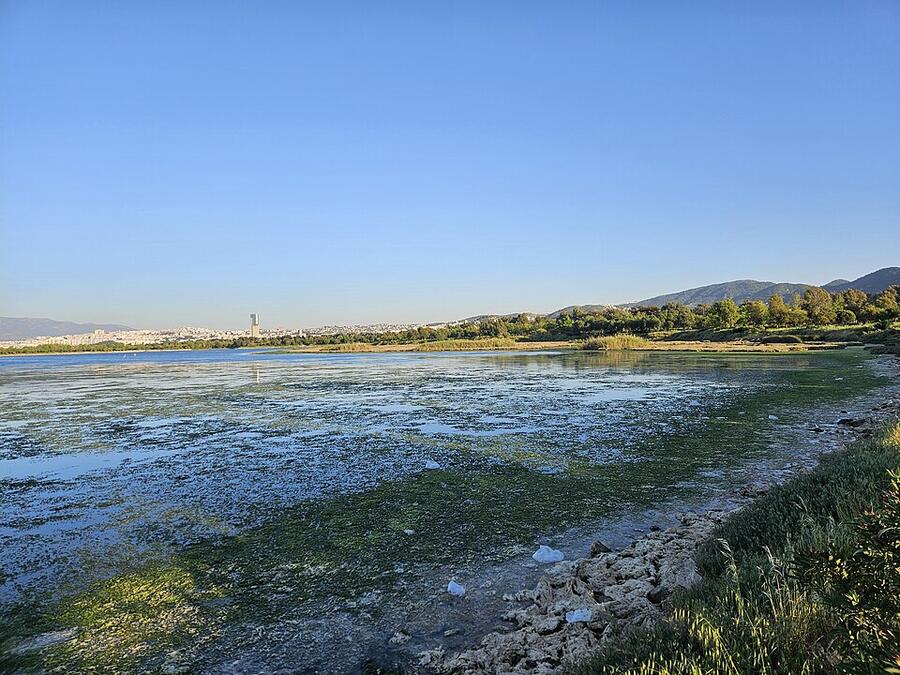
Photos illustrate the region; they are not photos of the campsites themselves.
- İnciraltı, Balçova: Flyttblock, CC BY-SA 4.0, Wikimedia Commons