
There's no single wild camping rule in Türkiye, so here are the pieces
A tent in the forest, a campervan on the beach, a night in a national park. The forest bans, national park rules, turtle beaches and local council decisions that shape wild camping in Türkiye, as they stand at the time of writing.
Teknovan Editorial Team ·
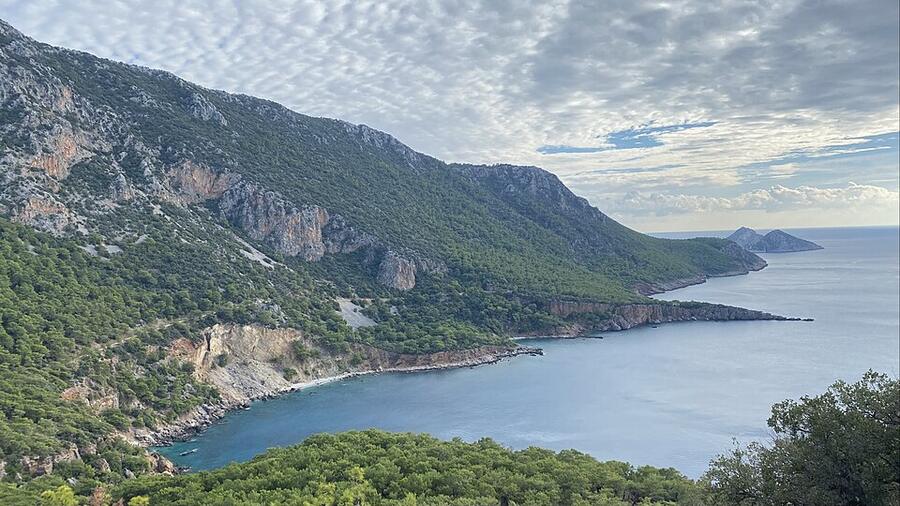
The honest answer to "Is wild camping illegal in Türkiye?" is that there isn't one law. Instead there's a pile of overlapping rules. Some apply all year, some only in summer, some in a single district. Someone who pitched a tent in the same cove for three years without trouble can meet the municipal police (zabıta) in the fourth, because the council has passed a decision in the meantime.
In this post we go through those pieces one by one. Everything is correct at the time of writing. Because the rules change often, under each heading we've also explained how to check the official source.
The coast belongs to everyone, but sleeping there is another matter
Article 5 of Kıyı Kanunu (the Coastal Law, No. 3621) is clear: the coast is under the authority of the state and open to everyone to use equally and freely. That's about the right to get onto the shore and reach the sea. It doesn't mean a right to pitch a tent on the shore and stay the night.
Overnight stays can be regulated by municipalities and district boards. The clearest example came in Didim in 2026. By decision of the Didim district public health board (İlçe Umumi Hıfzıssıhha Meclisi), from 1 April 2026 it became illegal to stay overnight by parking a campervan or pitching a tent anywhere other than licensed campsites and accommodation. The ban covers beaches, parks, squares, picnic areas, woodland and roadsides. Anyone who breaks it gets an administrative fine, and tents and campervans that aren't removed are taken away by council teams at the owner's expense.
The easiest way to find out whether the district you're heading to has a decision like this is to look at the latest announcements from the municipality and the district governor's office (kaymakamlık). Asking local shopkeepers often works too.
Forests: largely closed in summer
There are two separate layers of rules in the forests.
Fire-season bans. Every year, governors' offices ban entry to forested areas on the decision of the provincial wildfire commissions. In 2026 the examples looked like this:
| Province | Ban period (2026) |
|---|---|
| Antalya | 1 May-31 October |
| Aydın | 19 May-31 October (pitching tents and camping also banned) |
| Muğla | 1 June-31 October |
We listed the decisions for İzmir, Manisa and Çanakkale in our post on Aegean forest walks.
During this period camping in the forest is out of the question. In some provinces registered picnic areas are excluded. In Muğla, fireworks and sky lanterns were also banned at campsites close to forests.
Year-round rules. Even outside the ban period, staying overnight in a forest without permission counts as one of the most common offences under Orman Kanunu (the Forest Law, No. 6831). The way to stay inside a forest is through the picnic sites and forest camps permitted by Orman Genel Müdürlüğü (the General Directorate of Forestry).
National parks and nature parks
Milli Parklar Kanunu (the National Parks Law, No. 2873) defines four types of protected area: national park, nature park, nature conservation area and natural monument. What can be done where in these areas is set by management plans. In practice it means something simple: pitch your tent at the park's campsite.
Many national parks and nature parks have such areas. Dilek Peninsula National Park and Karagöl Nature Park on Yamanlar are two of them. If you want to stay outside the designated area, the most reliable thing is to ask the ranger at the gate or the regional branch of Doğa Koruma ve Milli Parklar (the General Directorate of Nature Conservation and National Parks) that the park belongs to.
Turtle beaches: no entry at night
Türkiye has 21 beaches where sea turtles nest. Nine are in Antalya, the others in Muğla, Mersin, Adana and Hatay. During the nesting and hatching season, which runs from May to the end of September, entering these beaches at night is banned. At İztuzu, Patara and Çıralı the ban starts at 20.00.
Pitching a tent, camping, driving onto the sand and lighting fires on these beaches are never allowed. The administrative fine announced for 2026 is 699,245 TL. That's not a typo.
We explained how to behave on a nesting beach in our Patara and sea turtles guide.
Private land: the quick way to ask
A field, an olive grove, an orchard or a village's common grazing land may look as if it belongs to nobody, but it belongs to someone. Don't pitch a tent without asking the owner. In villages, the easiest way to do this is:
- Call in at the muhtarlık (the village headman's office) or the café.
- Say how many nights you want to stay and how many of you there are.
- Make it clear from the start that you won't light a fire and you'll take your rubbish with you.
- Ask how you can sort out water and a toilet.
In most places this conversation takes five minutes and ends with an invitation to tea. And no is an answer too.
Safety notes
- Don't pitch a tent in a stream bed. A bed that looks dry in summer can fill within minutes after a downpour in the mountains.
- Tell someone your route. Especially where there's no phone signal.
- Don't light fires. Even outside the ban period, one spark is enough on a slope of dry grass. If you see smoke, call 112.
- Don't leave valuables in the tent. Especially at the roadside and close to villages.
- A roadside or a car park is not a campsite. In many places, as in Didim, it's explicitly banned.
Staying without leaving a trace
Whether wild camping stays possible in the long run depends on what campers leave behind. Environmental pollution and improper disposal of waste were among the reasons given for the Didim decision.
- Take back everything you bring. Wet wipes and cigarette ends included.
- For the toilet, dig a hole 15-20 centimetres deep at least 60 metres from water, and fill it in.
- Don't wash up in a stream or the sea. Fill a bucket and pour the water away at a distance.
- If you can, pitch the tent on ground that's been used before and has no vegetation.
- Keep noise and light down. Lights on the beach at night also confuse turtles.
Frequently asked questions
Is it illegal to pitch a tent on the beach in Türkiye? There's no nationwide ban, but many districts ban staying in tents and campervans outside licensed areas. On turtle beaches it's banned outright.
Can I camp in the forest? Not during fire season (June to October in most provinces). In other months, choose permitted areas such as forest camps and picnic sites.
Can you put up a tent in a national park? Yes, at the campsite the park has designated. Pitching anywhere else inside the park needs the park's permission.
What happens if I get fined? An administrative fine and removal of the tent are the most common penalties. Amounts vary from province to province and year to year.
If you want peace of mind, the easiest way is to choose a licensed site from our campsite list. If you're setting off in a campervan, our post on driving a motorhome in Türkiye will help too.
Sources
- Kıyı Kanunu (Coastal Law, 3621), Lexpera
- No more unauthorised campervan and tent stays in Didim, Habertürk
- Aydın governor's office forest entry decision, GZT
- Forest entry banned in Muğla, İşçi Haber
- Forest entry banned in Antalya, Karar
- The fine for entering turtle beaches at night is 699,000 TL, DHA
- Article on offences under the Forest Law, DergiPark
- Seven Principles of Leave No Trace, Green Earth
Image credits
Photos illustrate the region; they are not photos of the campsites themselves.
- Karaöz: Skaraoz7, CC BY-SA 4.0, Wikimedia Commons
- Tavşanburnu Tabiat Parkı: Guurkancelik, CC BY-SA 4.0, Wikimedia Commons