
9 rules for camping in the summer heat, from finding shade to wildfires
Practical rules for July and August camping on Türkiye's Aegean and Mediterranean coast: choosing a shaded pitch, keeping food without a fridge, water, sun, mosquitoes and ticks, fire bans and what to do in a forest fire.
Teknovan Editorial Team ·
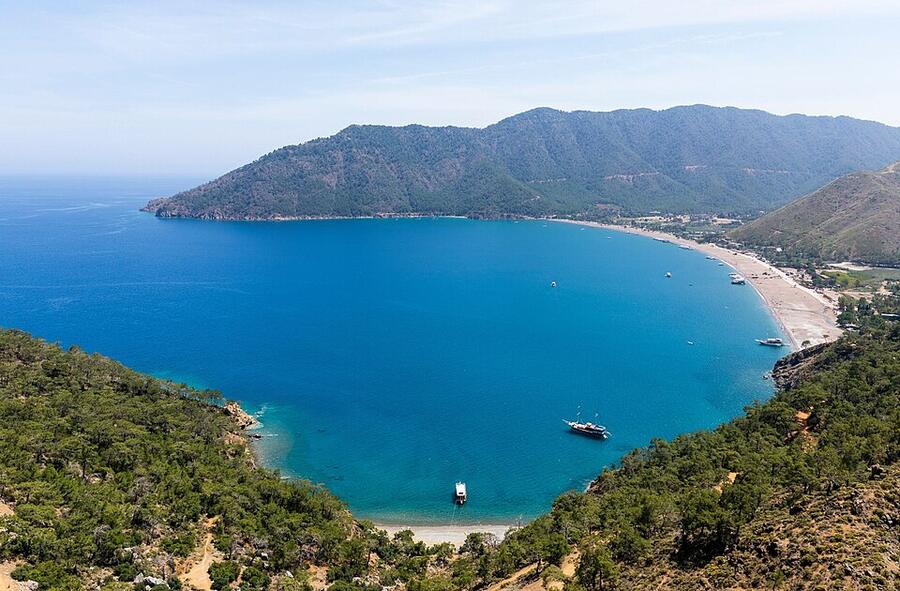
Camping on the Aegean or Mediterranean coast in July is the quickest way to learn what shade is worth at midday. The cool of the morning is gone by nine, by the afternoon the tent is an oven, and in the evening the mosquitoes clock on. All of that can be managed. The one thing that can't is a forest fire, which is why it gets the longest section of this post.
1. Choose your pitch for shade and morning sun
When you pick a pitch, think about the time of day. The afternoon sun comes from the west, and that's the one that burns. A spot with tree or building shade on its western side keeps your tent or campervan a few degrees cooler in the middle of the day. If the eastern side is open to the morning sun you'll wake up early, which in summer is a good thing.
- Pitch the tent on bare soil or the ground the campsite has set aside, not straight on pine needles and dry grass.
- Don't pitch under large trees standing on their own. There's a risk of dead branches falling and of lightning.
- A pitch right on the sea looks lovely, but it also takes the wind and the damp first. One row back is often more comfortable.
2. Put up the awning and shade before midday
A tarp, two poles and four guy ropes are the best summer investment you can make. If the campervan has an awning, put it out, but roll it in when the wind gets up. Put the shade next to the tent rather than on top of it, leaving a gap for air to flow. Keep the tent's vents and doors open during the day, with the mesh zipped shut.
3. No fridge? Buy food to a plan
Carrying meat and dairy in summer without a fridge is risky. Here's the plan:
- Day one: fresh meat, chicken, cheese. In the cool box, only as much as you'll eat that first evening.
- The following days: dried pulses, bulgur, pasta, tins, walnuts, dried fruit, bread, tomatoes, cucumbers, peppers, watermelon.
- Cool box: in the shade, opened as little as possible, covered with a wet cloth. Frozen water bottles are both ice and the next day's drinking water.
- Buy a little every day from the local market and the corner shop. In coastal villages the morning bakery is often the best breakfast plan.
It's worth remembering that the Turkish Ministry of Health's hot weather advice recommends fresh vegetables and fruit and small, frequent meals over heavy, fatty and fried food. At camp that's easier to do anyway.
4. Drink before you're thirsty
In its summer warnings the Ministry of Health recommends drinking at least 2.5-3 litres of water a day. At camp you're moving, swimming and sweating, so you may need more than that. Work out the daily drinking water per person and bring large water bottles to match. You lose salt and minerals along with water, so ayran (a salty yoghurt drink) and mineral water are good choices. Cut down on tea and coffee.
Ask whether the campsite's water is drinkable. We explained why to keep fresh tank water and drinking water separate in a campervan in our post on campervan water, electricity and waste.
5. Spend the middle of the day in the shade
The ministry asks people to avoid being outdoors where possible between 11.00 and 16.00, when the sun is strongest. At camp that means walking early in the morning or late in the afternoon, and spending midday in the shade with a book or with short swims. Everyone should have a hat, a thin long-sleeved shirt and sun cream in their bag. Children, older people and anyone with a chronic illness are more at risk.
6. Be ready for mosquitoes and ticks
Mosquitoes: active in the late afternoon and at night. Keep the tent's mesh closed, wear long sleeves and use repellent. Don't leave standing water around: a bucket, a washing-up bowl or a dish left the right way up is enough for mosquito larvae.
Ticks: when you walk in woods, scrub and grassland, tuck your trousers into your socks, wear light colours and check yourself and your children in the evening. According to the Ministry of Health, a tick that has attached itself should not be removed with bare hands but with something like tweezers, gloves, a cloth or a plastic bag, without crushing it, and you should then go to the nearest health centre. Don't put cologne, paraffin or anything similar on the tick. Anyone who has had a tick should watch themselves for at least 10 days. If fever, fatigue, muscle pain, nausea or diarrhoea appear, see a doctor straight away.
7. No fires in the forest, full stop
Under Article 76 of Orman Kanunu (the Forest Law, No. 6831), lighting fires in forests is banned except in places where it's permitted and designated as a fire spot. On top of that, governors' offices announce extra bans every summer. At the time of writing, for 2026:
| Province | What's banned | Period |
|---|---|---|
| İzmir | Entry to designated forested areas | 1 June-31 October 2026 |
| Muğla | Entry to 50 designated forested areas, and stopping, picnicking and fires in them | 1 June-31 October 2026 |
| Antalya | Entry to forested areas other than those designated by the authorities (circular No. 2026/3) | 1 May-31 October 2026 |
In previous years the Antalya governor's office has also issued circulars banning fires within 4 kilometres of a forest, private land included. The scope and dates of the bans are set again every year. Check the relevant governor's office announcement before you go.
In practice the rule is simple: if the campsite hasn't shown you a fire spot, don't light a fire. Use a gas stove on firm, open ground too, not on dry grass. Don't drop cigarette ends on the ground, and don't throw them from the car. Pick up glass bottles and broken glass.
8. What to do if a forest fire breaks out
If you see smoke, call 112 first. The Ministry of Agriculture and Forestry's list of emergency numbers gives 112 for forest fires. Describe the location as clearly as you can: the village name, the road, the direction of the fire.
- Check the wind direction as you leave. Fire moves with the wind. Don't head where the smoke is going. Move away to the side or upwind, towards open ground, already burnt ground or the sea if you can.
- Don't flee uphill. Fire climbs slopes faster.
- Leave your things. The tent, the chairs, the campervan awning. None of them are worth it.
- If you're leaving in the campervan, leave early. Being caught in smoke on a narrow forest road is the worst case. Think about setting off as soon as you see smoke, before an evacuation warning comes.
- Don't try to fight the fire yourself. Follow the instructions of the officials and don't go into the fire area out of curiosity.
- Don't breathe the smoke. Covering your mouth and nose with a wet cloth helps for a short while.
When you arrive at a campsite, ask about the exit route and the assembly point. Doing this once can save you half a minute in a panic.
9. The easiest way to escape the crowds and the heat
Look at the calendar. Early June and September are both cooler and quieter on the coast than July and August. If you're camping in summer, choose places that are a bit higher, wooded and close to water. The area around Kaz Mountains National Park or Akyaka and the Azmak, for example, lets you breathe a little even on the hottest days on the coast. But during forest ban periods, check the entry rules for these areas separately.
Frequently asked questions
Is camping in the forest banned in summer in Türkiye? At the time of writing, in provinces such as İzmir, Muğla and Antalya entry to designated forested areas is banned throughout the summer. Licensed campsites may be treated differently, so check the governor's office announcement and the campsite.
Can you have a barbecue at a campsite? It depends on the campsite's rules and the governor's office bans. Only at the fire spots the site has designated, and only in permitted periods.
What should I do if a tick bites me? Remove it, or have it removed, without touching it with bare hands and without crushing it, then go to a health centre. Watch yourself for ten days.
How do you keep food at camp without a fridge? Eat perishables on the first day, then carry on with dry food and long-lasting vegetables, and keep the cool box in the shade.
If it's your first time out in a campervan, our first campervan trip checklist will help. For sites with shaded pitches, have a look at the campsite list.
Sources
- NTV: ministry warns, drink at least 2.5-3 litres of water a day
- BirGün: hot weather warning from the Ministry of Health
- Sabah: tick warning from the Ministry of Health
- BirGün: the ministry's guide to mosquitoes
- Yeni Asır: forest entry banned in İzmir (June 2026)
- Milliyet: entry to dozens of forested areas banned in Muğla
- Politikam: Antalya forest entry ban circular 2026
- BirGün: Antalya governor's circular bans fires within 4 kilometres of forests
Image credits
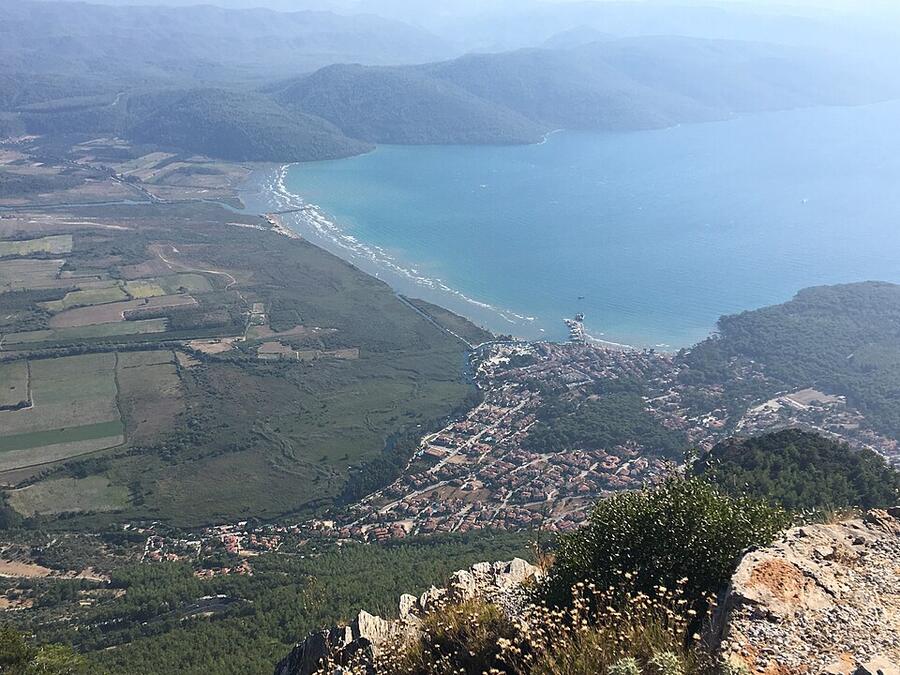
Photos illustrate the region; they are not photos of the campsites themselves.
- Adrasan: Bilgegezgintr, CC BY-SA 4.0, Wikimedia Commons
- Gökova Körfezi: Iemizrak, CC BY-SA 4.0, Wikimedia Commons