
Don't let campervan guests get stuck at the gate: pre-arrival messages and the first 10 minutes
Check-in at a campsite starts before the guest reaches the gate. Which messages to send before arrival, road and gate details for campervans, arrival times and how the first 10 minutes should go.
Teknovan Editorial Team ·

A guest's first real opinion of your campsite is often formed not on the pitch but in the last two kilometres. The satnav has sent them down a dirt track, there's no phone signal, there's a 7-metre caravan on the back and nobody can see where the gate is. A guest who finds that road without getting lost even once looks at the rest of the site with goodwill.
This post covers the stretch from the messages before arrival to the first 10 minutes at the gate. If you want the full picture of guest experience, start with why guest experience is a campsite's most valuable asset.
Which message should go when
Spreading the information out over time works better than one long message. Guests don't read the directions on the day they book. They read them the morning they set off.
| When | What to send | Why |
|---|---|---|
| With the booking confirmation | Dates, pitch type, price, cancellation terms, arrival time window | So guests know what they've booked and when they can arrive |
| 2-3 days before arrival | Location pin, directions, warnings about vehicle length and height, what to bring | Useful while they plan the journey |
| On the morning of arrival | Short reminder, a phone number that will be answered, what to do if they're running late | Guests on the road don't read long texts |
| 1 hour after arrival | "Have you settled in, is anything missing?" | A small problem gets solved before it turns into a review |
In its guide for hosts, Hipcamp recommends writing arrival instructions in short sentences, step by step, and having someone who has never been to the property read them. That last tip is simple but effective: give your directions to a friend who doesn't know the area and see where they hesitate.
Directions for campervans: what the satnav doesn't know
A satnav shows you the shortest road, not the road a campervan can get down. Hipcamp's guide also advises pointing out narrow roads, steep slopes and low branches in advance, and saying whether the pitch is on a slope or needs reversing into. For many campsites in Türkiye, that list becomes something like this:
- Gate width and turning angle. At the time of writing, the maximum width for road vehicles in Türkiye is set at 2.55 metres and the maximum height at 4 metres (for details see the relevant regulation of the Ulaştırma ve Altyapı Bakanlığı, the Ministry of Transport and Infrastructure). Wing mirrors stick out beyond the body. Measure your gate with a tape and put the figure in the message. "Our gate is 3.2 metres wide, with a sharp right turn off the main road" is far more useful than "campervans can get in".
- Slope. It doesn't matter if you don't know the exact gradient of the road down to the site, but you can write "the last 300 metres are steep and unpaved, slippery after rain". A car towing a heavy caravan can easily lose grip on a wet dirt ramp.
- Branches and cables. Pine branches at the entrance or low power lines are a risk for high-roofed campervans. Drive the road once in a tall vehicle, or measure the lowest point.
- Where the satnav gets it wrong. A sentence like "Google will want to take you through the village, don't go that way, turn right 200 metres past the petrol station" saves a phone call and some stress.
- Landmarks for the last stretch. A sign, a coloured flag, the mulberry tree on the corner. Hipcamp also recommends giving visual landmarks and distances where GPS is unreliable.
Check your location pin too. If the pin on your business listing shows the middle of the land rather than the gate, a campervan guest could end up stuck in the olive grove round the back. Put the pin right in front of the gate and say in the message "the pin shows the gate".
The arrival window: limits are good for guests too
Many businesses are reluctant to give times and say "come whenever you like". Then at 11.30pm there's a campervan at the gate with its headlights on, neighbours trying to sleep and a member of staff with a torch hunting for the pitch.
The Caravan and Motorhome Club, one of Britain's big camping organisations, says on its sites that arrival is normally after 1pm, and asks early arrivals to wait somewhere safe away from the site. Some of its sites also have a separate waiting area for late arrivals, which needs arranging with the site team in advance. You don't need to copy this model exactly, but the logic works:
- Give a clear window. For example 2pm to 8pm. It leaves the morning free to clean and prepare pitches.
- Set one rule for late arrival. "If you'll be arriving after 8pm, please call or message by 7pm." Send late guests their pitch number, how to find it in the dark and the quiet hours in advance.
- Write one sentence for early arrivals. A suggestion for a nearby café, beach or shop beats waiting at the gate.
Arriving in the dark is sometimes unavoidable. In that case, reflective numbers at pitch entrances, a few low solar lamps along the track and a short written welcome note at the gate make a big difference.
The first 10 minutes at the gate
Guests have come a long way. They want the toilet, the children want to get out of the car. The first 10 minutes are about settling in, not paperwork.
- Minutes 0-2: Hello, names, "how was the drive?". Don't leave the campervan waiting at the gate. If there's a waiting bay that won't block traffic, have them pull in there.
- Minutes 2-5: Registration. Take ID details and payment online in advance if you can, and only check them at the gate. Campsites may have legal reporting obligations, so check with your provincial police and tourism directorates for the rules in force at the time of writing.
- Minutes 5-8: Lead them to the pitch. Going ahead on a bike or on foot stops the campervan turning down the wrong track and having to reverse out. On sloping pitches, hand out levelling blocks or show where to put them.
- Minutes 8-10: Three things, no more: where the toilets and showers are, the electricity and water hook-up, quiet hours. Leave the rest on a written card or in a message.
Reading out a long list of rules at the gate makes nobody happy. We've covered how to write and explain rules separately in quiet hours and campsite rules.
What a campsite in Türkiye can take from this
- Measure your gate, the tightest turn and the lowest branch. Put the measurements in the message after booking.
- Move the location pin to the front of the gate and have a stranger read your directions.
- Add the arrival window and the late arrival rule to the booking confirmation.
- Take registration and payment before arrival as far as you can, and use the gate for settling guests in.
- Send a short "is everything all right?" message an hour after arrival.
Timing these messages is less work if you think about it together with your booking system. Our post on the benefits of online booking for campsites may help here too.
teknovan.io is software that lets a campsite send booking confirmations and pre-arrival messages from a single dashboard.
Sources
- How do I update my arrival instructions?, Hipcamp Help Centre
- 6 steps for a smooth check-in process, Hipcamp Journal
- UK Club Campsite Rules, Caravan and Motorhome Club
- Regulation on vehicle loading dimensions and weight and size tolerances, Ulaştırma ve Altyapı Bakanlığı
Image credits
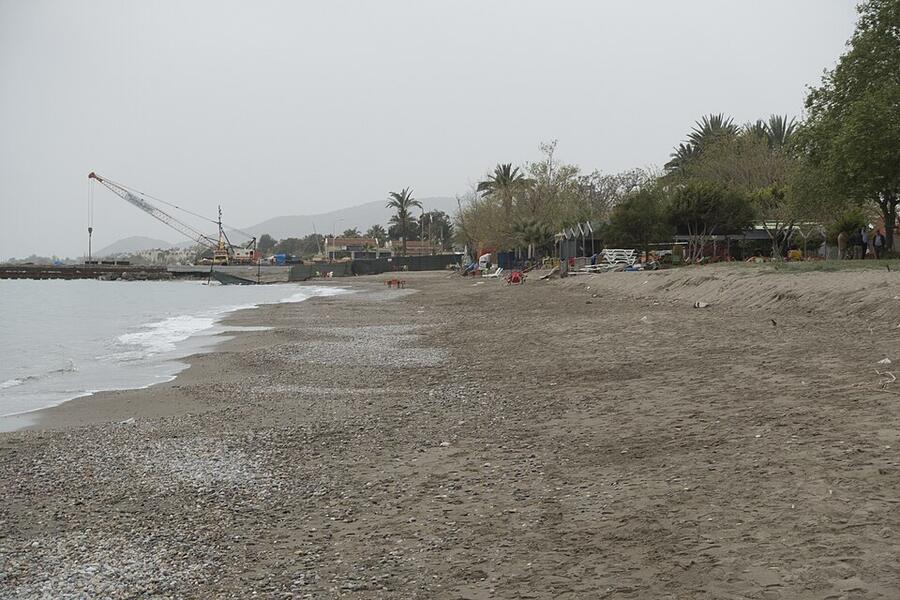
Photos illustrate the region; they are not photos of the campsites themselves.
- Karaöz: Skaraoz7, CC BY-SA 4.0, Wikimedia Commons