
The 5 things families with children check first at a campsite
When families with children choose a campsite, they look at water safety, the play area, traffic on site, the distance to the toilets and quiet hours. A practical list for campsite owners.
Teknovan Editorial Team ·
When a family with children chooses a campsite, the first question isn't about the view, it's about what could go wrong. How far is the sea, do cars drive past the pitch, how far is the walk to the toilet at night with a torch? If the listing doesn't answer these, the family either rings or doesn't, and moves on to another listing.
The 2024 family and kids report from KOA, the big North American campground chain, is based on a survey of 4,100 households in the US and Canada. According to the report, 58 per cent of guests who camp with children say their children's interests influence where they go. And 62 per cent of families new to camping chose a campground with plenty of services and amenities for their first trip. There's no similar study for Türkiye, but you don't need a survey to see that a family on its first camping trip is more cautious.
1. Water: the most serious point
According to the World Health Organization's drowning reports, children aged 1-4 have the highest drowning rate in the world, followed by those aged 5-9. The first item on the WHO's prevention list is installing barriers that control access to water.
For a campsite, that means:
- If there's a pool, a fence and a gate. A self-closing gate does more than a sign saying "children must not use the pool alone". Write clearly in the listing when the pool is open and whether there's a lifeguard.
- Streams, ponds, irrigation tanks. If your land has water a guest might not notice, always mention it on arrival and fence it off if you can.
- The seashore. If the water gets deep straight away, or the shore is rocky or has currents, say so with photos and words. A shore described as "shallow and sandy" that drops off at the first step is dangerous, and it's also the easiest reason for a bad review.
Don't give exaggerated guarantees here. Instead of writing "completely safe for children", write what you've done: "The pool is fenced, the gate closes by itself, there's no lifeguard."
2. Play area: small but well kept
A play area in the listing sends families a good signal. But a neglected swing is worse than none at all.
In Türkiye the TS EN 1176 series applies to playground equipment, and in Europe the EN 1177 standard is used for the impact-absorbing surface underneath. An academic review of parks in Ankara reports that in many playgrounds the fall zones were inadequate in size and surface. When you build or renew your own play area:
- Buy equipment from a manufacturer who can document that it meets the standard.
- Put a proper impact-absorbing surface under swings and slides, not concrete or bare earth.
- At the start of the season and in busy weeks, check bolts, chains and broken parts, and write the date of each check in a logbook.
- Keep the play area away from roads and pitch entrances.
A play area doesn't always mean equipment. A sandpit in the shade, a flat patch for ball games and a fallen log as a balance beam can keep children busy for hours. They're also easier to maintain.
3. Traffic on site and night lighting
Vehicles going to and fro between pitches are the biggest risk after water. A campervan reversing can't see the four-year-old behind it.
- Set a speed rule on the internal roads that doesn't exceed walking pace, and post it at the entrance.
- If you can, put the places where children gather (play area, shared kitchen) in a corner with no vehicle traffic.
- Light the path to the toilets at night with low, downward-facing lights. The child doesn't trip in the dark, and the light doesn't shine into the eyes of the guests on the next pitch.
4. Toilets and showers through a parent's eyes
A parent looks at the toilets and showers a little differently. Cleanliness is a must, but it isn't the only measure:
- Distance. Walking a three-year-old 200 metres at night is hard. Say in the listing which pitches are close to the toilets.
- A family cubicle or baby-changing area. If you have one, put it in the first lines of the listing, because families look for it.
- A low sink or a step. A small wooden step costs little, but families notice it.
- Hot water hours. Children get washed after dinner. If the hot water runs out at that time, the family finds out on the first evening.
5. Quiet hours: the rule families love most
Families with children usually go to bed early and get up early. Music until midnight or a generator running at 7am can ruin a whole night for a family. Writing down and enforcing quiet hours is the cheapest service you can offer families.
Some businesses put family pitches in one area and pitches for young people or groups in another. If the shape of your land allows it, it's worth a try. We explained in detail how to write quiet hours and get everyone to accept them in quiet hours and campsite rules.
What to put in your listing
Families scanning a listing look for the information below. Give all of it in short points, with photos:
| Information | Example wording |
|---|---|
| Water | "The sea is 80 metres from the pitches, the shore is pebbly and the first 10 metres are shallow" |
| Pool | "Fenced pool, open 9am to 7pm, no lifeguard" |
| Play area | "Swing, slide and sandpit in the shade, rubber surface" |
| Vehicles | "Walking pace on internal roads, play area separate from the road" |
| Bathroom | "Family cubicle and baby-changing table available" |
| Quiet hours | "No music or generators between 11pm and 8am" |
These are examples. Write what's true at your own site. Your photos should back up these points too: the play area in the listing should also appear in the pictures.
What a campsite in Türkiye can take from this
- Explain every water risk (pool, stream, shore that gets deep quickly) out loud on arrival and in writing in the listing.
- Keep the play area small but up to standard, and keep a maintenance log.
- Set a speed rule on internal roads, and keep the places where children gather away from vehicles.
- Move family-friendly features to the first lines of your listing.
- Write down quiet hours, and group family pitches together if you can.
Families with children who are happy once may come back every summer. We looked at what that loyalty brings a business in why guest experience is a campsite's most valuable asset.
On teknovan.io, campsites can define the features of each pitch (close to the toilets, shade, family area and so on) and show them to guests.
Sources
- KOA report: kids who camp with family more likely to become lifelong campers, Modern Campground
- Camping and Outdoor Hospitality Report, KOA
- Drowning, World Health Organization
- Article assessing children's playgrounds in Ankara parks against TS EN 1176, DergiPark
- Impact absorbing playground surfacing (EN 1177), BSI
Image credits
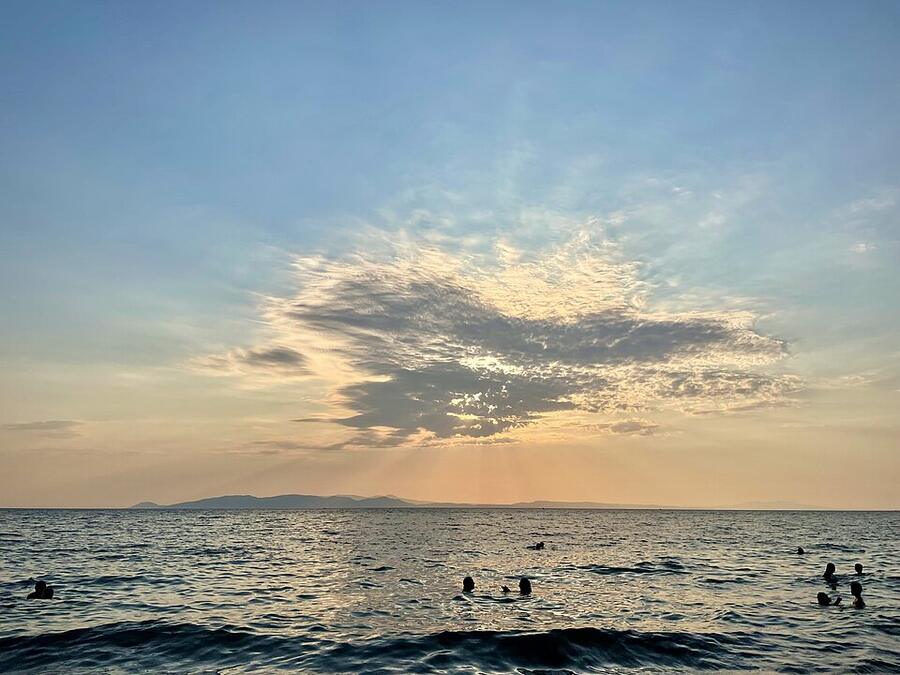
Photos illustrate the region; they are not photos of the campsites themselves.
- Dikili: Tomhannen, CC BY-SA 4.0, Wikimedia Commons