
Neighbours, quiet hours and holiday crowds at Turkish campsites
At a campsite in Türkiye your neighbour may offer you tea, you may hear the dawn call to prayer, and in a holiday week you may not find a free pitch. Local customs for foreign visitors on hospitality, clothing, rubbish, fires and dogs.
Teknovan Editorial Team ·
What you'll meet most often at a campsite in Türkiye is an offer you weren't expecting: a glass of tea from the next tent, a plate of watermelon, or the question "where are you from?". Turkish camping culture is social; families come in big groups and evenings go on late. Fitting in is a matter of knowing a few local customs: how to respond to hospitality, how to see quiet hours and the call to prayer, how to plan around holiday weeks, how to dress in villages and mosques, and the rules on rubbish, fires and dogs.
The notes below are based on general observation and official sources. Every region and every family is different; the best guide is to watch what the people around you do.
Hospitality: tea, offerings and neighbourliness
In Turkish the word "misafir" (guest) carries a lot of weight. If the family on the next pitch brings you tea or food, it's a gesture of courtesy and nothing is expected in return.
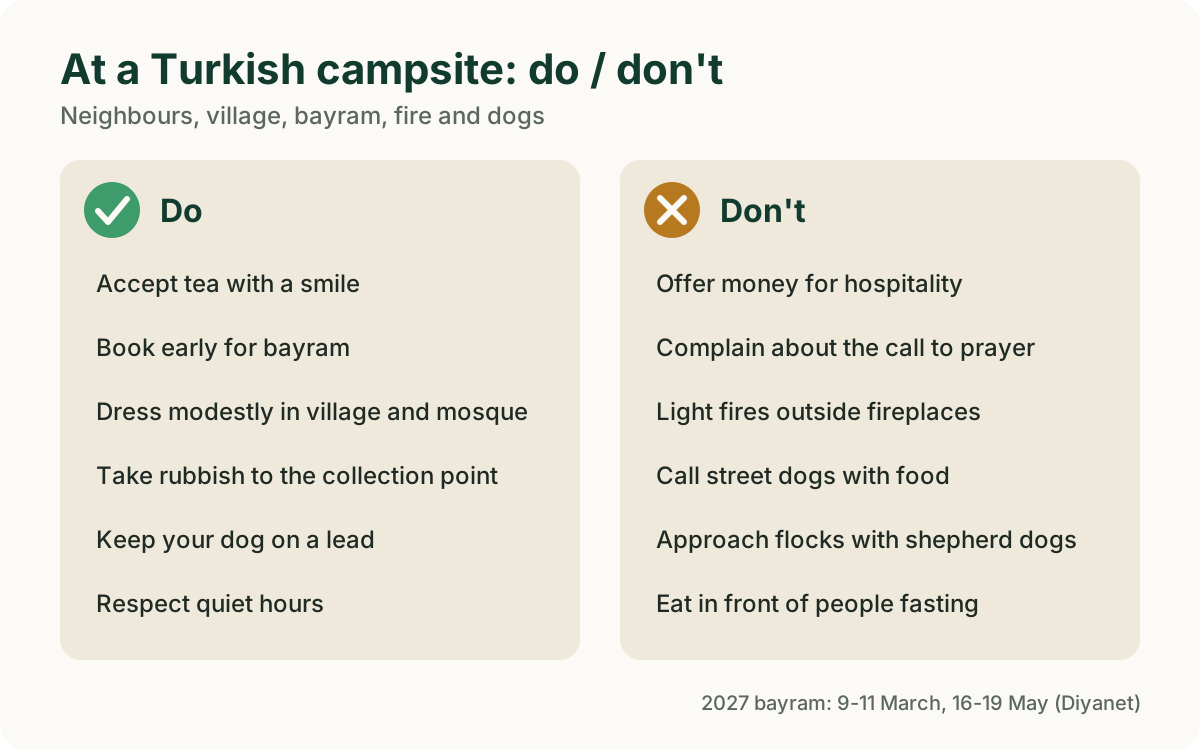
- Accepting is the most natural response. If you don't want it, smiling and saying "Teşekkürler, sağ olun" (thank you) is enough. Declining a second offer of tea goes down more easily than declining the first.
- Don't offer money. Offering money in return for hospitality can cause offence. If you'd like to return the favour, take over a snack from home, some coffee or fruit the next day.
- Learn a few words. "Merhaba" (hello), "Teşekkürler" (thank you), "Kolay gelsin" (said to someone who is working), "Afiyet olsun" (said to someone eating). These four words open a lot of doors.
- Attention to children is normal. Older people patting your child's head or pinching a cheek is common and well meant.
- Shoes. If you're invited into someone's caravan, tent or village house, look whether they take their shoes off at the door and do the same.
Quiet hours, the call to prayer and evening company
In Turkish families dinner starts late and goes on. Most campsites still have quiet hours, usually starting towards midnight; you'll see them at the entrance or on the rules page. If the next table is noisy late at night, first ask politely yourself, and if that doesn't work, tell reception. We described how campsites approach this in our post on quiet hours and campsite rules.
The call to prayer (ezan) is recited from mosques five times a day. The first is at dawn, which in summer means early morning. If your campsite is near a village or town, you may hear it over the loudspeaker. It's part of everyday life and not something people complain about. If you sleep lightly, earplugs will do the job.
Campsites fill up at bayram and on holidays
Türkiye has two religious holidays (bayram), and their dates move about 11 days earlier each year. During bayram people visit relatives or go on holiday, and coastal campsites and roads fill up. According to the 2027 calendar of the Presidency of Religious Affairs (Diyanet):
| Holiday | Eve | Holiday days |
|---|---|---|
| Ramazan Bayramı (Eid al-Fitr) | 8 March 2027 | 9-11 March 2027 |
| Kurban Bayramı (Eid al-Adha) | 15 May 2027 | 16-19 May 2027 |
The government sometimes extends the bayram break by joining it to a weekend; such decisions are usually announced a few weeks beforehand. In 2027 Kurban Bayramı coincides with the 19 May public holiday, so expect crowds accordingly. From late June, when schools close, to mid-September, coastal campsites are also full at weekends.
If you're camping in a bayram week, book early. On Teknokamp you can pick your pitch on the map and reserve your spot in advance; turning up at the gate without a booking is risky during bayram. During Ramadan (February and early March in 2027) eating and drinking in the daytime is not forbidden in villages, but it's considered polite to avoid eating in front of someone who is fasting. During Kurban Bayramı you may come across animal sacrifice in villages.
Clothing: beach, village and mosque
- On the beach and at the campsite swimwear, shorts and sleeveless tops are fine.
- In the village, at the village café (kahve), at the market dressing a little more modestly, covering your shoulders and wearing shorts or a skirt instead of swimwear, is a sign of respect.
- When entering a mosque take your shoes off, cover shoulders and knees, and women cover their heads with a scarf. Don't visit during prayer times, and ask before taking photos inside.
Rubbish, fires and dogs
Rubbish. Use the campsite's rubbish and recycling point and don't leave rubbish next to your pitch; dogs and cats will tear the bags open. Outside the campsite, in a cove or on a mountain pasture, take back everything you brought.
Fire. In Türkiye lighting fires in forests anywhere other than designated fireplaces is forbidden under the Forest Law. Governors' offices also announce bans on entering forested areas in summer. If the campsite hasn't marked a fireplace, don't light a fire. Details and province-by-province bans are in our post on camping rules in the summer heat.
Street and village dogs. Ownerless dogs are common in Türkiye. Dogs with an ear tag have usually been vaccinated and neutered by the municipality, and most are calm. Still, don't call them over with food and don't leave pet food at your pitch. Shepherd dogs guarding flocks in the countryside are another matter: don't approach the flock, don't run, move away calmly, and wave if you see the shepherd. If a dog bites or scratches you, wash the wound with soap and water and see a health facility the same day; see our emergencies and health guide.
Your own dog. Keep it on a lead at the campsite and pick up after it. Some sites don't accept dogs, so check when you book.
Frequently asked questions
The next tent brought us tea. What should I do?
Thank them and accept. In return, a small treat the next day is appropriate, not money.
The dawn call to prayer wakes me. Can I complain to the campsite?
The call to prayer is part of daily life and not under the campsite's control. If you sleep lightly, use earplugs or choose a site away from villages.
When is bayram in 2027?
According to the Diyanet calendar, Ramazan Bayramı is 9-11 March and Kurban Bayramı 16-19 May 2027. The dates change every year, so check the official calendar before you go.
Can I walk around the village in shorts?
Coastal villages are used to tourists, but dressing a little more modestly in the village and at the mosque is appreciated as a sign of respect.
Should I be afraid of street dogs?
Most are calm. Don't call them with food and don't approach shepherd dogs guarding a flock. If bitten, see a health facility the same day.
Sources
- Presidency of Religious Affairs (Diyanet), calendar of religious days
- 2027 holiday dates, when are Kurban Bayramı and Ramazan Bayramı, Dünya
- Forest Law No. 6831, Legislation Information System
- Ministry of Culture and Tourism, Go Türkiye official site
- Animal Protection Law No. 5199, Legislation Information System
Image credits
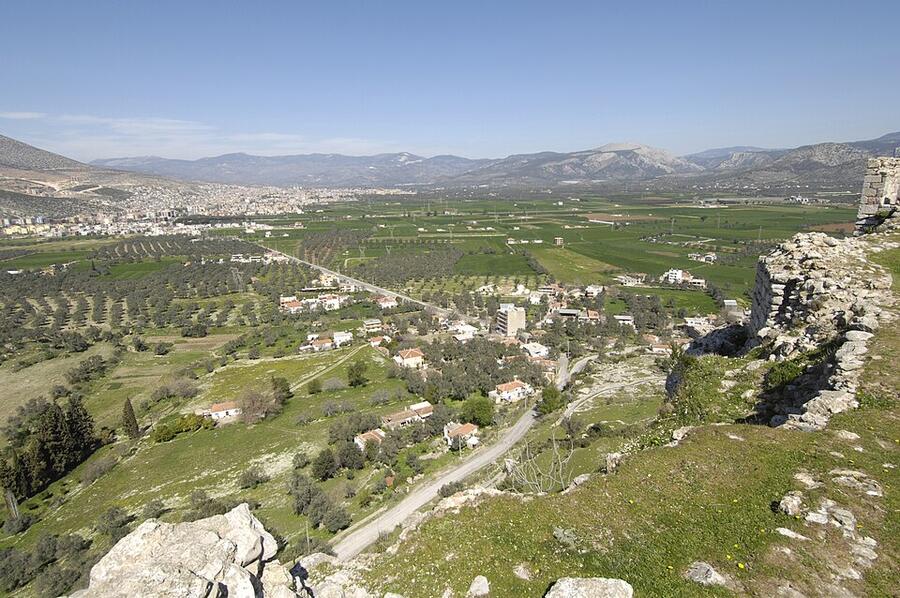
Photos illustrate the region; they are not photos of the campsites themselves.
- Beçin'den Milas: Dosseman, CC BY-SA 4.0, Wikimedia Commons