
Money on a camping holiday: lira, cards, cash and tipping
In Türkiye card payment is common at campsites, supermarkets and petrol stations, but keep some Turkish lira on you for village markets, small kiosks and tips. When to pay with what, ATMs and exchange offices, haggling and paying online.
Teknovan Editorial Team ·
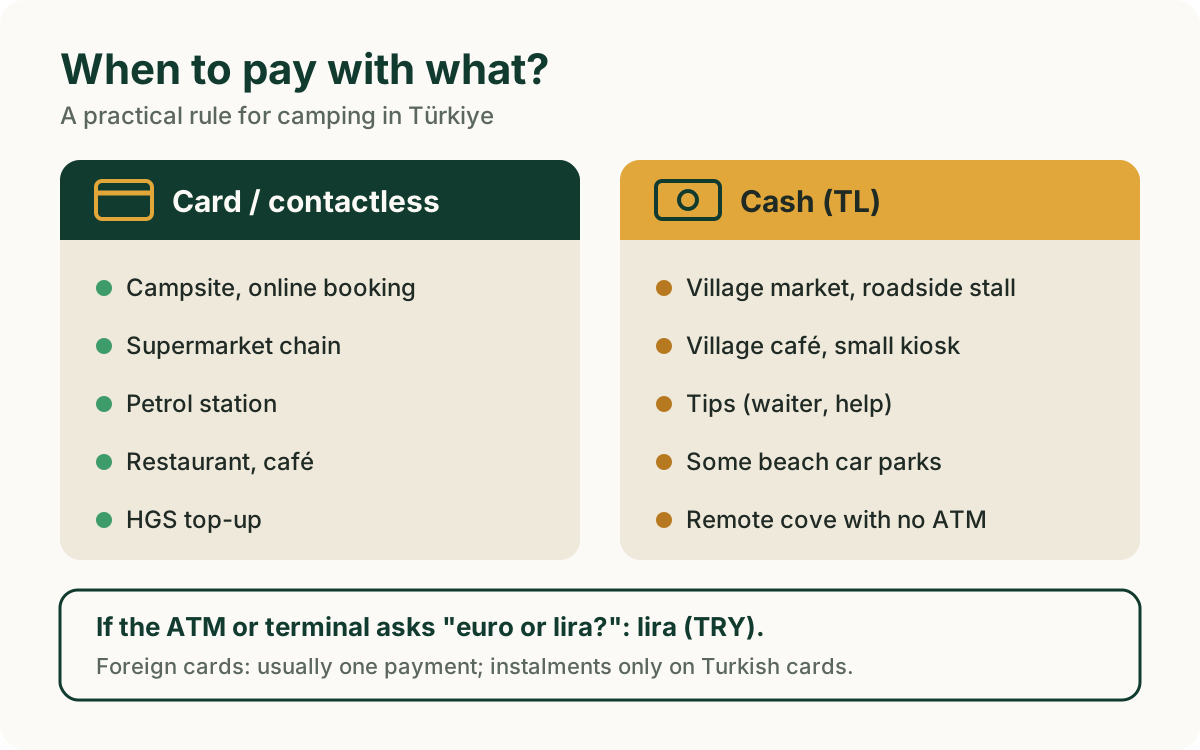
You can pay for most of your camping holiday in Türkiye by card: campsites, supermarket chains, petrol stations and most restaurants accept cards, contactless cards and phone payments. The places where you'll need cash are few but real: the village market, a roadside stall, a small village café, some beach car parks, and tips. The currency is the Turkish lira (TL, code TRY). Euros or dollars are accepted in some tourist spots, but the rate usually works against you, so it's better to pay in lira.
The information below is based on general observation and official sources as of writing (November 2026). We don't give prices or exchange rates; both change quickly.
When to use a card and when to use cash
A simple rule: card anywhere with price tags and a till, cash at stalls and in villages. The graphic below sums it up at a glance.
| Where? | Usually | Note |
|---|---|---|
| Campsite reception | Card | Nothing to pay at the gate if paid online |
| Supermarket chain, petrol station | Card, contactless | Phone payment is common |
| Restaurant, café | Card | Some cash for tips |
| Village market, roadside stall | Cash | Carry small notes |
| Village café, small kiosk | Often cash | Ask first |
| City bus, minibus (dolmuş) | Varies by city | Some cities need a city card |
At small businesses it's polite to ask before paying by card: "Kart geçiyor mu?" (Do you take cards?). If the till says "sadece nakit" (cash only), don't insist.
A tip for campsites: the "pay at the gate on arrival" approach familiar from European camping exists in Türkiye too, but in busy periods the surest way to get a place is to book ahead. On Teknokamp you can pick your pitch on the campsite map and complete the booking together with payment.
Turkish lira: ATMs and exchange offices
- ATMs. Bank ATMs are found in cities, resorts and the centre of most villages. When withdrawing with a foreign card, the ATM operator and your own bank may both charge a fee. If the screen asks whether you want to withdraw in your own currency or in lira, choose lira (TRY). If you choose your own currency, the ATM does the conversion (dynamic currency conversion) and the rate is usually worse.
- The same question when paying by card. If the card terminal or the waiter asks "euro or lira?", say lira.
- Exchange offices (döviz bürosu). Common in city centres and tourist bazaars. Check the buying and selling rates on the board and ask for a receipt. Airport offices are usually less favourable than those in town.
- Before heading to remote coves. At a campsite in a small cove or mountain village the nearest ATM may be kilometres away. Get the cash you need in the last town before you set off.
Small notes make life easier. A market stallholder may not be able to change a large note.
Card payments and online booking
Contactless payment is widespread in Türkiye; phone and watch wallets mostly work too. With foreign cards your bank may sometimes block an overseas transaction for security, so it helps to tell your bank about your trip before you leave or switch on overseas use in its app.
On Teknokamp, booking payments are made online by card. Payment is taken via iyzico with 3D Secure, so your bank may ask you to confirm with a code sent to your phone or in your banking app. Make sure your foreign number can receive texts (our phone and SIM card guide helps with this).
To be honest about instalments: paying by credit card in instalments is very common in Türkiye, but the option depends on cards issued by Turkish banks. With a card issued abroad you'll usually pay in a single payment. The payment page shows which options are available once you enter the first digits of your card.
Tipping: how much and to whom?
Tipping isn't compulsory in Türkiye, but leaving a tip for good service is customary. The common advice of travel guides can be summed up like this:
- Restaurants and cafés: If the bill doesn't say "servis dahil" (service included), people leave about 10 per cent. It's customary to tip in cash, directly to the waiter; it may not be possible to add a tip when paying by card.
- Taxis: Rounding up the fare is enough.
- Campsites: No tip is expected at reception. A small thank-you tip for a staff member who helped you, parked your caravan or carried your gas bottle is appreciated.
- Guided tours and boat trips: Leaving something for the guide or crew at the end of the day is common.
When unsure, the gesture matters more than the amount. One more thing: offering money to someone in a village who has given you tea or fruit can cause offence. Thank them instead. More on these customs in our post on Turkish camping culture and etiquette.
Where to haggle and where not to
In Türkiye the price on the tag or menu applies in shops, supermarkets, pharmacies, campsites and restaurants; there's no haggling. Price tags are mandatory under Ministry of Trade regulations. If you see an item without a tag, you have the right to ask the price.
The places where haggling is natural are limited:
- Carpets, ceramics and souvenirs in tourist bazaars.
- At the village market when you buy several items, but not for a single tomato.
- For a long stay, a discount asked directly of the business.
Haggle with a smile and calmly. If you don't accept the price, it's fine to say thank you and walk away.
Frequently asked questions
Can I pay in euros in Türkiye?
In some tourist places yes, but the rate usually works against you. It's better to choose lira when paying by card and at the ATM.
Can I pay by card at the campsite?
At most, yes. If you're going to a small family-run site, ask when you book. For online bookings, payment is made by card anyway.
Can I pay in instalments with a foreign card?
Usually not. Instalment options are specific to credit cards from Turkish banks. With a foreign card you pay in a single payment.
How much cash should I carry?
Enough for a few days of market shopping, tips and small kiosk purchases. Paying for the rest by card is both safer and more practical.
Can I pay motorway and bridge tolls in cash?
No, toll booths don't take cash. Details in our HGS guide for foreign drivers.
Sources
- Central Bank of the Republic of Türkiye, indicative exchange rates
- Ministry of Trade, Price Tag Regulation, Legislation Information System
- Tipping in Turkey, Turkey Travel Planner
- Tipping in Turkey, istanbul.com
- Dynamic currency conversion, European Commission consumer information
Image credits
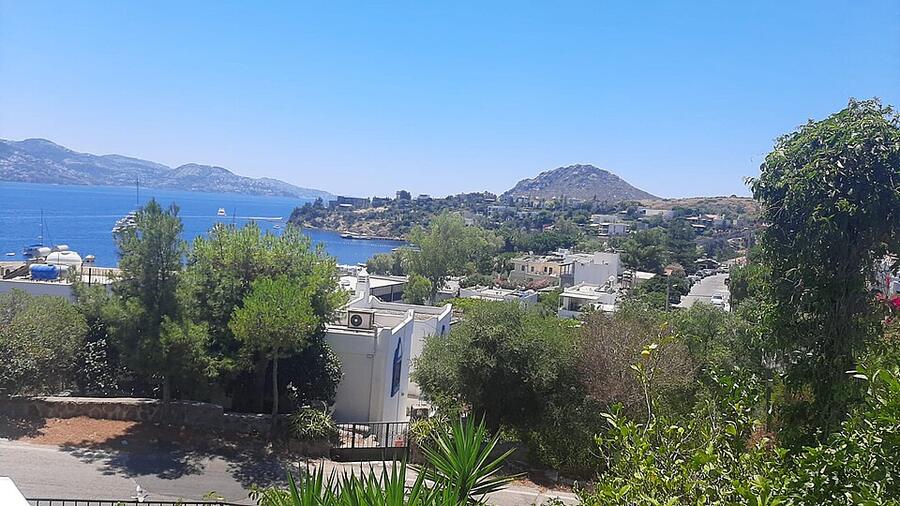
Photos illustrate the region; they are not photos of the campsites themselves.
- Bodrum: CeeGee, CC0, Wikimedia Commons